
Nitrided vs Bimetallic Screws: Which Lasts Longer
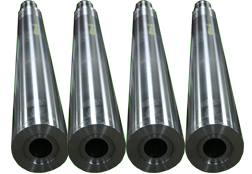
The choice between a nitrided screw and a bimetallic one is decided by the filler, not by the price list. Both are correct answers, for different jobs.
Nitrided screws
A nitrided screw is machined from 38CrMoAlA or 42CrMo, then gas nitrided to produce a hard case roughly 0.3 - 0.5 mm deep at 900 - 1100 HV. The core stays tough, the surface resists abrasion, and the cost is the lowest of the wear-resistant options. For unfilled commodity resins — PP, PE, PS, ABS, plain PC — a nitrided screw and barrel will run for years.
Limits: the hardened case is thin, so it does not tolerate aggressive fillers, and it offers little protection against corrosive resins or against HCl released by overheated PVC.
Bimetallic screws and barrels
A bimetallic barrel is lined with a centrifugally cast alloy — typically a nickel or cobalt based alloy with tungsten carbide particles — giving 1.5 - 3 mm of wear-resistant material. Screws are usually hard-chrome plated or fitted with welded hard-facing on the flights. Hardness is lower on paper than nitride, but the wear mechanism under glass fiber is different: the carbide particles resist the cutting action that strips a thin nitrided case.
Practical comparison
- Unfilled resin, normal duty: nitrided, no question
- Glass filled above 20%: bimetallic barrel plus hardened screw
- Corrosive resins (PVC, POM, flame-retardant grades): corrosion-resistant alloy, not nitride
- Budget and lead time: nitrided is cheaper and faster; bimetallic typically adds weeks
- Life expectancy: bimetallic commonly runs three to five times longer in abrasive service
A mixed build is common and sensible: bimetallic barrel with a nitrided screw for moderate filler levels, upgrading the screw only when wear appears. Ask for the alloy grade in writing — "bimetallic" alone does not specify a wear level.
Related products