
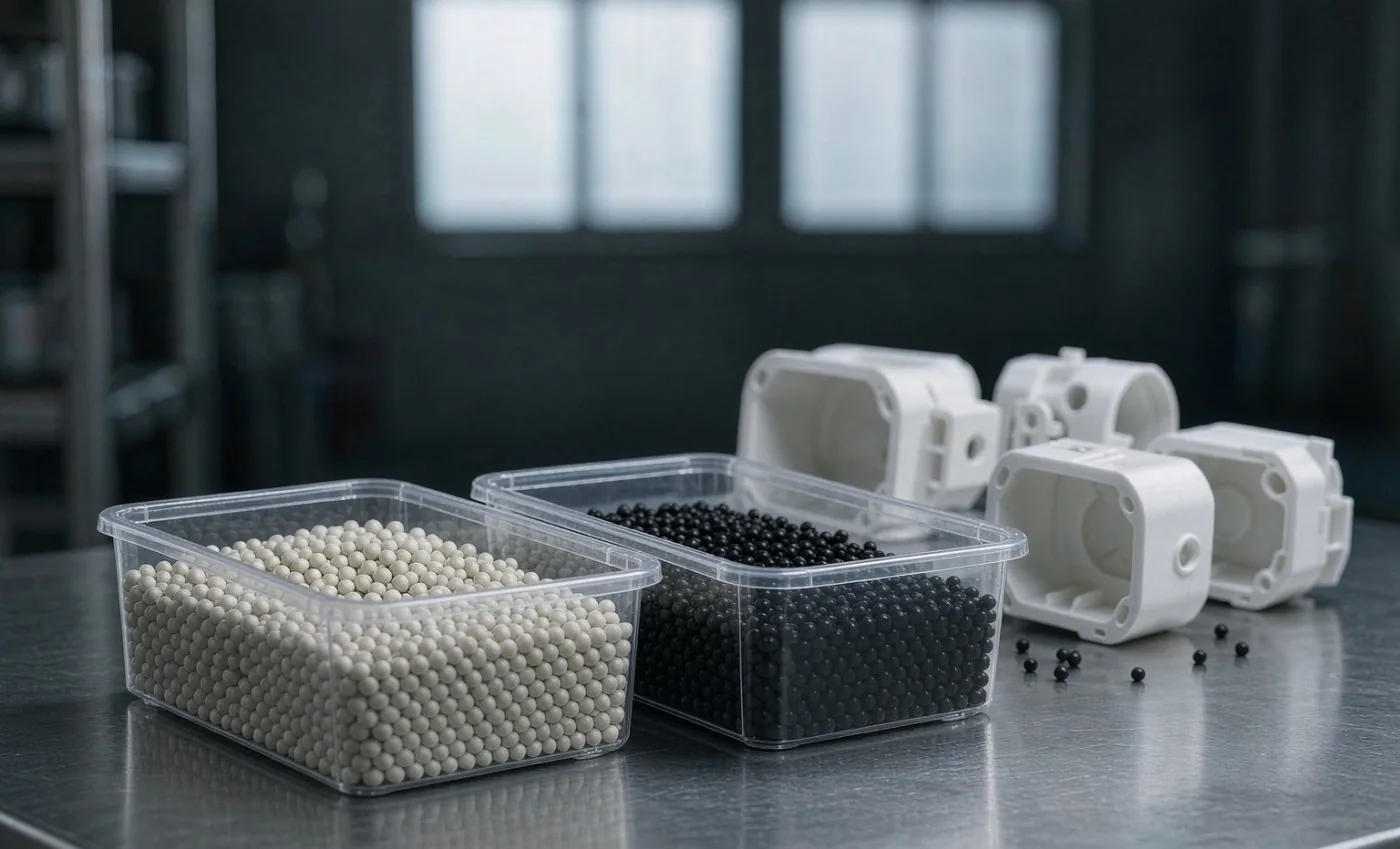
Injection Mold Releases — Choosing by Resin
Mold release agents for injection molding in silicone, non-silicone, water-based and solvent-based grades, aerosol and bulk, for PC, PA, POM and textured...
View details
Mold release agents for injection molding in silicone, non-silicone, water-based and solvent-based grades, aerosol and bulk, for PC, PA, POM and textured...
Give us the machine model, tonnage or the space it has to fit. We confirm the exact unit, controls and options before quoting.
Engineering review Monday to Saturday. Send the machine model and the output you need — the reply carries price, scope and delivery.
Not sure which size fits? Send the machine model or a photo of the existing unit and we will match it.
A mold release is the cheapest tool you have against sticking parts, ejector pin marks and short shots caused by drag. The right grade depends less on the resin than on what happens after ejection — whether the part gets painted, printed, welded or bonded.
| Type | Carrier | Best for | Finishing compatibility |
|---|---|---|---|
| Silicone | Solvent | Deep draws, textured molds, long runs | Must be removed before painting |
| Non-silicone | Solvent | Parts that will be painted, printed or bonded | Painting and assembly safe |
| Water-based | Water | Operator safety, low VOC workshops | Good, low residue |
| Dry film | Solvent | Semi-permanent release, high volume | Usually needs stripping before finishing |
| Silicone-free paste | Grease | Localized trouble spots, hot runner drops | Apply sparingly |
Most release problems are application problems. Spray from 200 - 300 mm at a 45 degree angle, let the carrier flash off, and apply to a mold between 40 and 80 °C — not to a cold mold, where the film pools in the corners. One light pass every five to twenty shots is normally enough. Over-application causes splay, silver streaking and paint adhesion failures far more often than under-application.
For polycarbonate and other transparent resins, use the non-silicone grade and reduce quantity; silicone contamination shows up as haze that cannot be polished out. For POM and PA with deep cores, a silicone grade gives better release but requires a proper washing step before any secondary operation.
Tell us your resin and what happens to the part after molding and we will recommend the grade and pack size.
Mold release agents for injection molding in silicone, non-silicone, water-based and solvent-based grades, aerosol and bulk, for PC, PA, POM and textured...
View detailsSend the machine model and the resin. We confirm geometry, material and surface treatment before quoting.
Have a drawing? Reply to our confirmation email with the file attached — PDF, STEP, DXF or a photo of the part all work.
Our engineering team answers during working hours, Monday to Saturday. For urgent orders, call +8613751260808.