
Transformation du PVC : conception de vis et protection anticorrosion
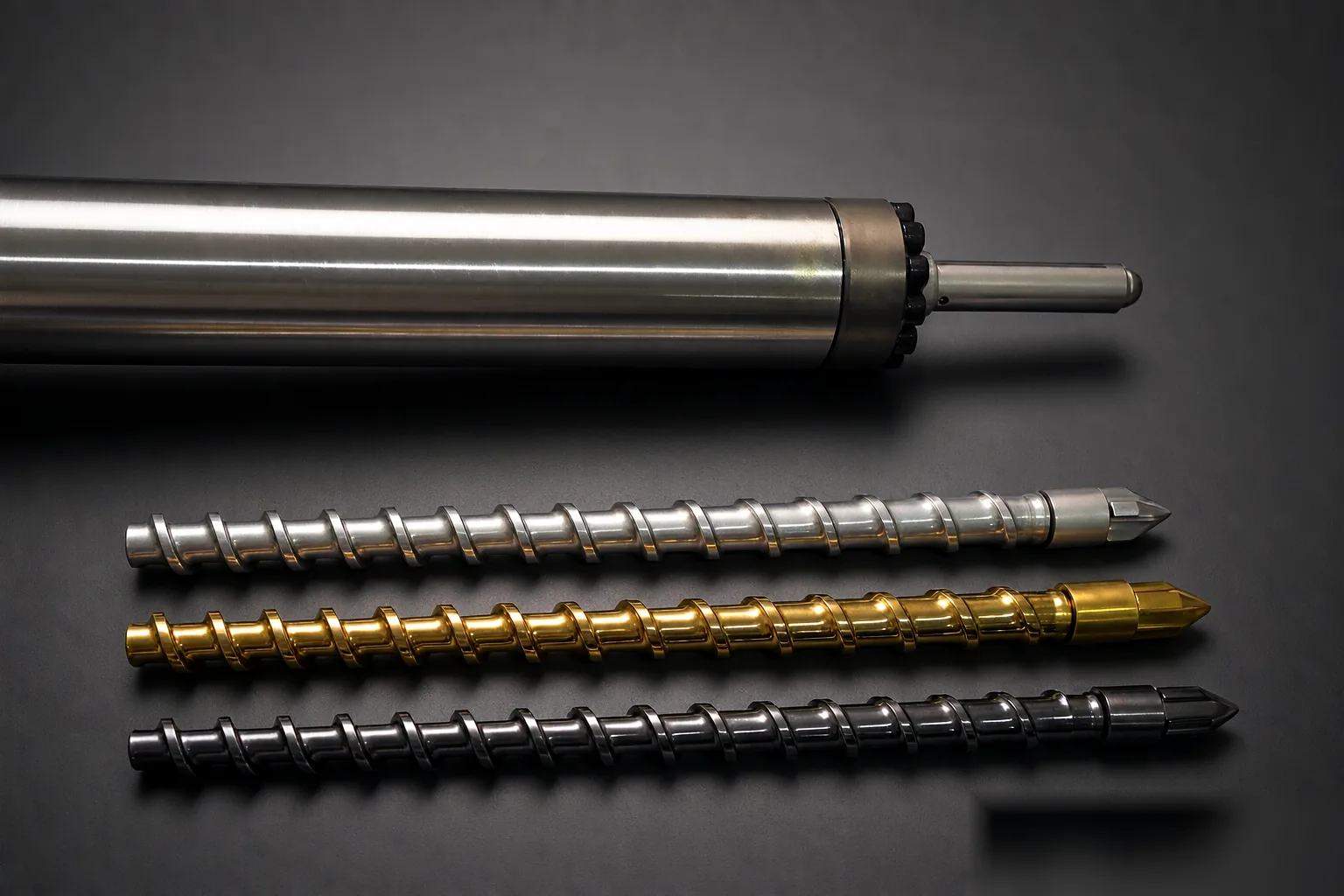
PVC is the resin that punishes equipment mistakes fastest. It is thermally unstable, corrosive when it degrades, and abrasive in rigid compounds.
Geometry
PVC needs a low compression ratio — typically 2.0 - 2.5:1 — and a deep, open metering channel. The goal is to convey and melt with minimum work, because every extra shear cycle moves the resin closer to releasing hydrogen chloride. A general purpose 3:1 screw run on PVC will produce burn marks that no temperature adjustment fixes.
Corrosion
Once HCl is released it attacks steel immediately, and the damage is self-accelerating: pits hold resin, resin degrades, more HCl. Protection options, in order of cost:
- Hard chrome plating on screw and barrel bore, 0.02 - 0.05 mm, good general protection
- Nickel or cobalt based alloy for the barrel liner, better in continuous PVC service
- Duplex stainless for the highest corrosion resistance, at a cost premium
- Nitrided only: acceptable for occasional PVC runs, not for continuous production
Process habits that matter more than the hardware
- Never leave PVC in a hot barrel. Purge before any stop longer than a few minutes.
- Keep melt temperature at the low end of the range and control it tightly.
- Use a purging compound designed for PVC; general purpose compounds can react with stabilizers.
- Avoid stagnant zones: free-flow tips, no sharp internal corners, generous nozzle orifice.
- Inspect for pitting annually, especially at the compression zone and behind the check ring.
If a screw has already pitted, reconditioning will not restore corrosion resistance unless the plating is stripped and renewed. Sometimes the honest answer is a new screw in a corrosion-resistant grade.
See screws, barrels and PVC material hose.
Related products