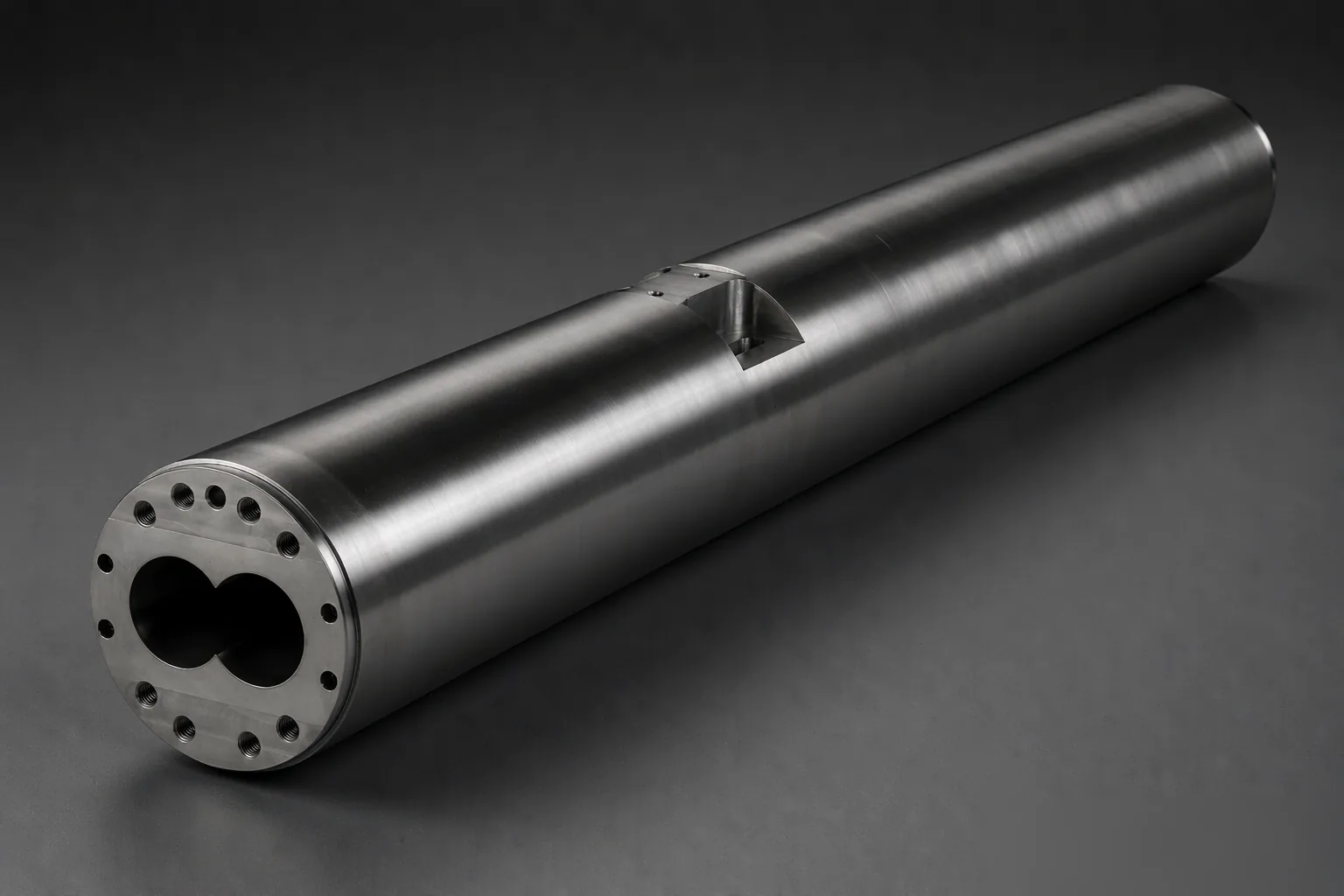
Cylindre éventé pour résines hygroscopiques
Vent port and decompression zone for hygroscopic and recycled material.
Voir le détail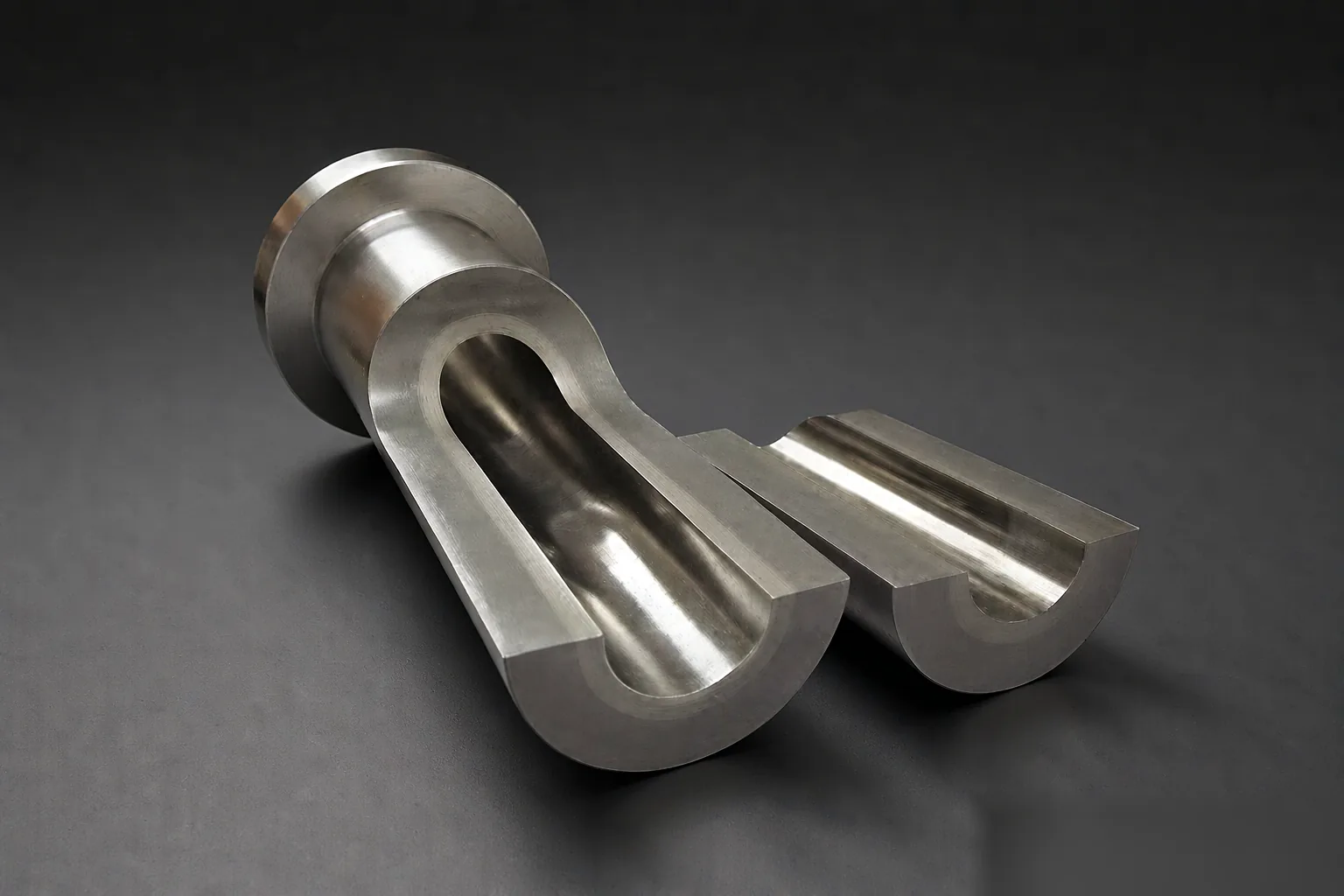
Wear-resistant liner for glass-filled, mineral-filled and abrasive compounds.
Usinée selon les dimensions de votre cylindre et la géométrie de votre vis — sans contrainte de catalogue. Pièce de rechange à l’unité ou lot de production.
Revue d’ingénierie du lundi au samedi. Envoyez modèle de machine, diamètre de vis et résine — la réponse comporte prix, nuance de matériau et délai.
Nous usinons d’après les dimensions, pas d’après des catalogues — vis et cylindres de rechange pour Haitian, Engel, Husky, Arburg, Nissei et autres presses, adaptés à l’alésage mesuré et à la liaison d’entraînement.
Pas de plan sous la main ? Envoyez une photo de la pièce usée et le modèle de machine — nous recalculons la géométrie et la confirmons avec vous avant usinage.
A bimetallic barrel carries a centrifugally cast alloy liner inside a steel shell. The liner is what the screw runs against, and it is chosen for the filler in your resin rather than for the resin itself.
| Parameter | Typical range | Confirmed at order |
|---|---|---|
| Shell material | Carbon or alloy steel tube | Mill certificate on request |
| Liner | Centrifugally cast wear-resistant alloy | Grade selected against the filler |
| Liner thickness | Commonly 1.5 to 4 mm after boring | Measured before and after machining |
| Liner hardness | Commonly HRC 60 and above | Tested on a coupon from the cast |
| Bore finish | Honed after the liner is cast in place | Profilometer check before dispatch |
| Bond integrity | Ultrasonic check for liner separation | Report available on request |
Tell us the filler type and loading and we will match the liner grade to it, rather than quoting the hardest option on the list.
On glass-filled, mineral-filled or corrosive compounds, and on high-throughput presses where downtime dominates cost. Under abrasive fillers the service life is substantially longer than a nitrided bore, which usually pays the difference.
Liner thickness and bond are measured before and after machining, and an ultrasonic check is available. The figures go into the inspection record shipped with the barrel.
It depends on how much liner remains — the liner thickness is measured first, and we quote re-machining or replacement against that measurement rather than guessing.
The bore is finished to match the screw it will run with, including the flight clearance against the measured diameter — not to a nominal bore. Send the machine model or the old barrel.
Vent port and decompression zone for hygroscopic and recycled material.
Voir le détail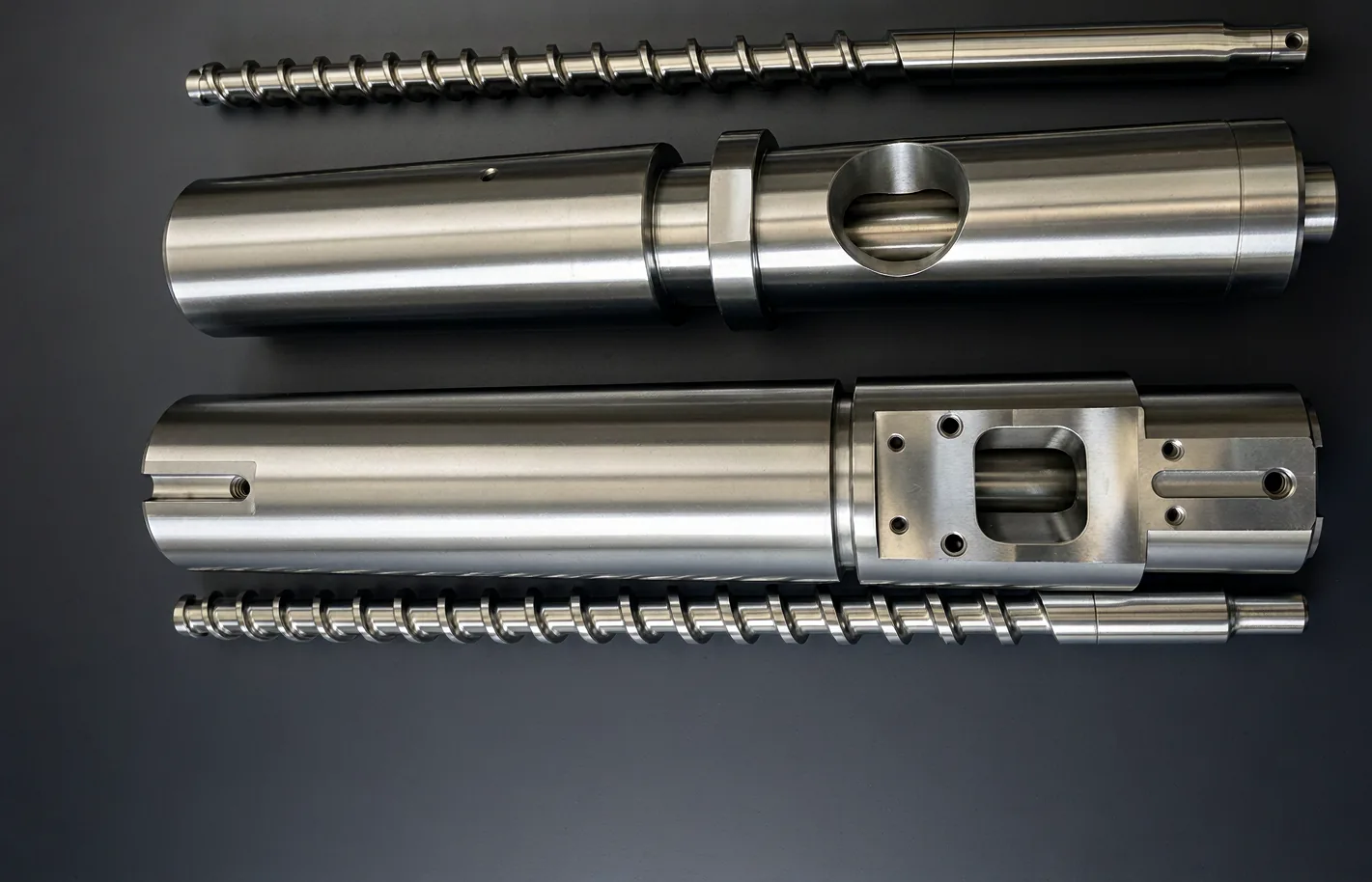
Cylindres pour presses et extrusion avec fourreau nitruré ou bimétallique, usinés aux dimensions de votre vis et contrôlés selon plan.
Voir le détail
Wear-resistant liner for glass-filled, mineral-filled and abrasive compounds.
Voir le détailIndiquez le modèle de machine et la résine — nous confirmons géométrie, matériau et traitement avant de chiffrer.
Vous avez un plan ? Répondez à notre e-mail de confirmation avec le fichier — PDF, STEP, DXF ou photo de la pièce, tout convient.
Notre équipe d’ingénierie répond aux heures ouvrées, du lundi au samedi. Pour les commandes urgentes, appelez le +8613751260808.