
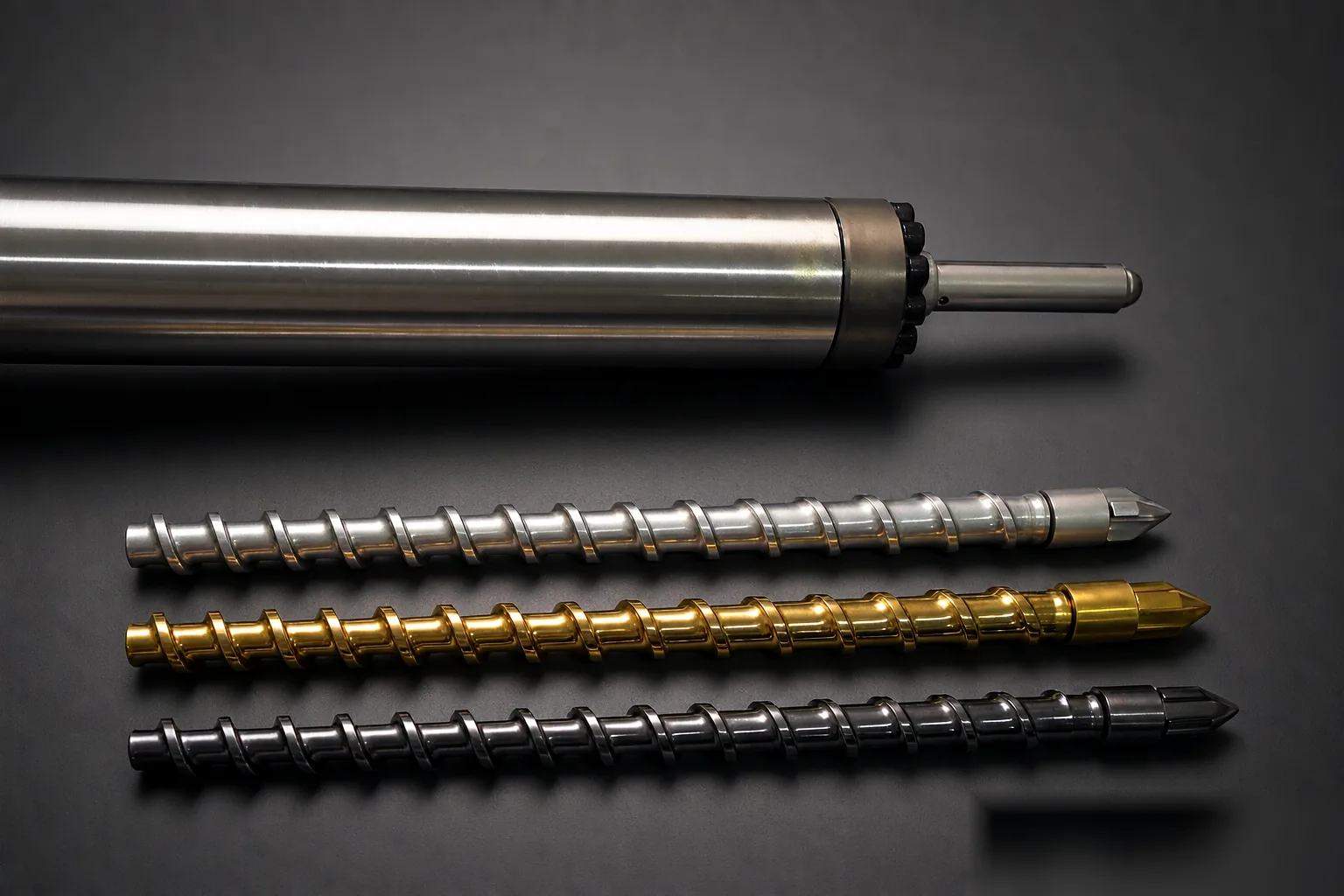
Trục vít ép nhựa — thấm nitơ & lưỡng kim
Trục vít ép và đùn hoàn thiện thấm nitơ, lưỡng kim và mạ crom cứng, gia công theo kích thước xi lanh và hình học trục vít của bạn — không theo số danh mục.
Xem chi tiết
Trục vít ép và đùn hoàn thiện thấm nitơ, lưỡng kim và mạ crom cứng, gia công theo kích thước xi lanh và hình học trục vít của bạn — không theo số danh mục.
Gia công theo kích thước xi lanh và hình học trục vít của bạn — không giới hạn danh mục. Một chi tiết thay thế hoặc lô sản xuất đều nhận.
Đánh giá kỹ thuật thứ Hai đến thứ Bảy. Gửi model máy, đường kính trục vít và nhựa — câu trả lời gồm giá, mác vật liệu và thời gian giao hàng.
Chúng tôi gia công theo kích thước, không theo danh mục — trục vít và xi lanh thay thế cho máy Haitian, Engel, Husky, Arburg, Nissei và các loại khác, khớp lòng trong đo thực tế và đầu nối truyền động.
Chưa có bản vẽ? Gửi ảnh chi tiết mòn và model máy — chúng tôi suy ngược hình học và xác nhận với bạn trước khi gia công.
The screw is where the shot is made. Feed depth, compression ratio, flight pitch and the length of each zone decide whether a resin melts evenly or arrives at the nozzle with unmelted cores and a temperature spread that shows up as flash on one part and a short shot on the next.
We cut screws to the barrel you already have. That means the starting point is your drawing or your existing screw, not a catalogue number — although the standard geometries below cover most of what comes through the door.
| Zone | Job | Typical share of L/D |
|---|---|---|
| Feed | Conveys solid resin and starts to compact it | About 25–30%, deeper channel than the rest of the screw |
| Compression | Melts and compresses; the channel shallows out here | About 20–25%, depth ratio set by the compression ratio |
| Metering | Pumps a uniform melt at stable pressure | About 45–50%, shallowest and most tightly toleranced section |
The shares move with the resin. A crystalline material such as PA or POM usually wants a longer compression zone than an amorphous PS or ABS; a vented screw needs a decompression zone between the two stages and cannot be laid out as a simple three-zone profile.
| Type | What it does | Where it earns its cost |
|---|---|---|
| General purpose | Conventional three-zone, single flight | Commodity PP, PE, ABS, PS; short cycles where mixing is not critical |
| Barrier | A secondary flight separates solid from melt along the melting length | High output, thick sections, resins that need a fully melted stream |
| Mixing section | Adds pins, a Maddock or a slotted mixer at the metering end | Color and additive dispersion, masterbatch, regrind blends |
| Vented | Two stages with a decompression zone under a vent port | Hygroscopic resins and regrind that carry moisture or volatiles |
| Treatment | Hardness band | Choose it when |
|---|---|---|
| Nitrided, 38CrMoAlA | Surface hardness in the HRC 56–58 band | Unfilled commodity resins; the economical default |
| Bimetallic overlay | Overlay hardness in the HRC 60+ band | Glass or mineral filled compounds, high filler loadings |
| Hard chrome | Thin plated layer over a hardened base | Corrosive resins and PVC processing, where release matters |
| Tungsten carbide | Highest wear resistance of the options | Abrasive filled engineering resins, long uninterrupted runs |
Hardness bands and zone shares above are the customary ranges for these constructions. The figures on your order are confirmed against your drawing or sample before cutting, not taken from this page.
Follow the wear source: unfilled commodity and engineering resins run well on nitrided screws; glass-filled, mineral-filled or corrosive compounds justify a bimetallic overlay or hard chrome. We recommend against the wear profile of your resin, not by price.
A single replacement is fine when the barrel bore is still in tolerance. When the barrel is worn too, a matched screw-and-barrel set is usually more economical than chasing clearances part by part. Measure the bore first and we will tell you which route makes sense.
Base steels and surface treatments are selected against your resin — typical bases with nitrided, hard-chrome or bimetallic finishes. The material grade and treatment are stated in the quotation and confirmed in writing before machining.
Yes. Dimensions and drawings stay on file, so repeat orders go straight to production without re-confirmation — just reference the machine and the previous order.
Trục vít ép và đùn hoàn thiện thấm nitơ, lưỡng kim và mạ crom cứng, gia công theo kích thước xi lanh và hình học trục vít của bạn — không theo số danh mục.
Xem chi tiết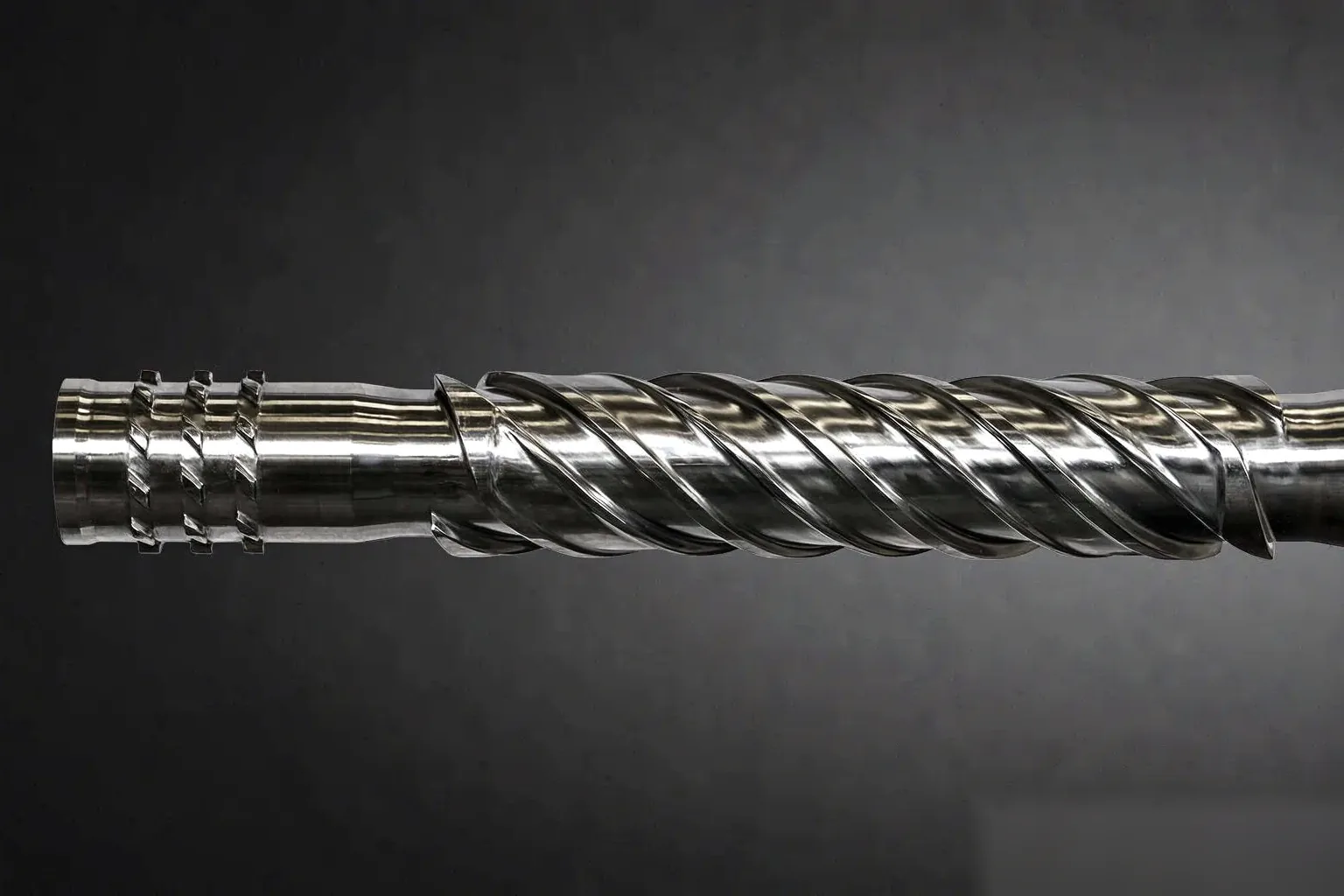
Adds a dispersive or distributive section to solve color streaks, specks and temperature variation.
Xem chi tiết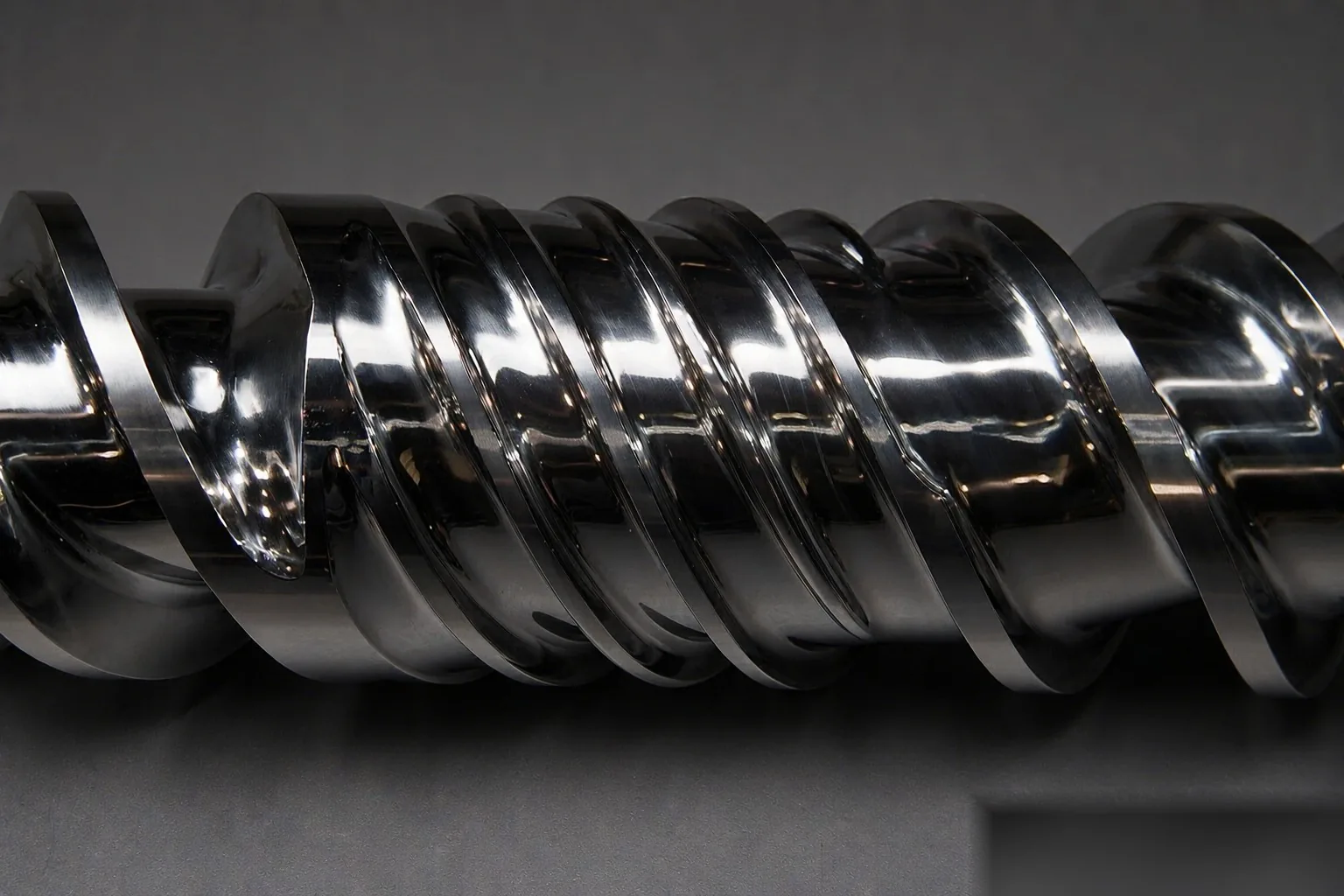
Separates solids from melt for a more even melt temperature on large shots and narrow processing windows.
Xem chi tiếtCung cấp model máy và nhựa — chúng tôi xác nhận hình học, vật liệu và xử lý bề mặt trước khi báo giá.
Đã có bản vẽ? Trả lời email xác nhận kèm tệp — PDF, STEP, DXF hoặc ảnh chi tiết đều được.
Đội kỹ thuật trả lời trong giờ làm việc, thứ Hai đến thứ Bảy. Đơn gấp, vui lòng gọi: +8613751260808.